Stroke recovery
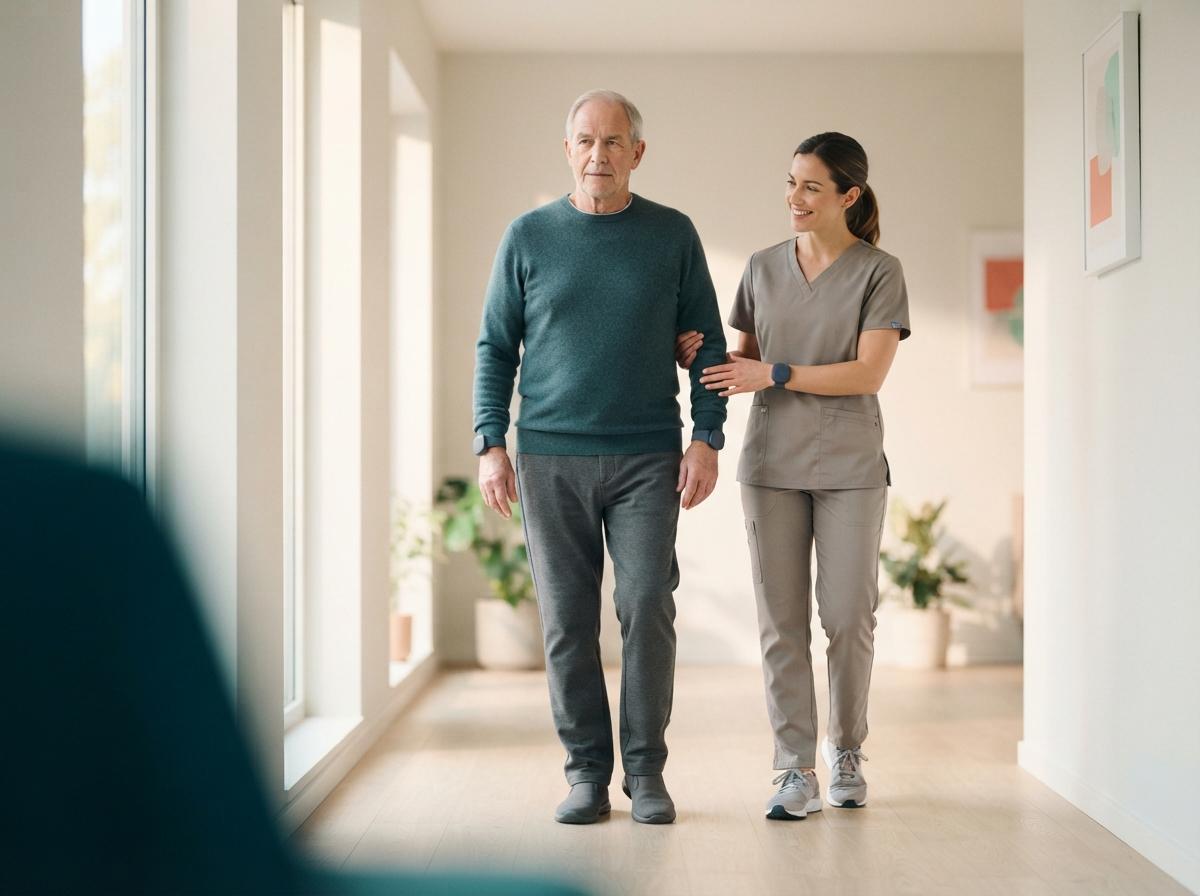
We're studying whether everyday measures of gait and movement can follow recovery between standard care visits.
Neuromotion is building wearable sensors and software for people recovering from stroke or living with Parkinson's disease. Three small sensors follow gait, balance and everyday movement, so care can follow the person, not just the clinic visit.

Wrist sensors
Gait and movement
Lightweight
Small and wireless
Belt sensor
Balance
Every step
Walking, day to day
A movement begins in the brain. The signal runs along long nerve fibres, down the spinal cord and out to the muscles of an arm or a leg.
A stroke can damage part of that path. Parkinson's disease slowly changes how movement is started and timed. Either way, the movement that comes out the other end changes too.
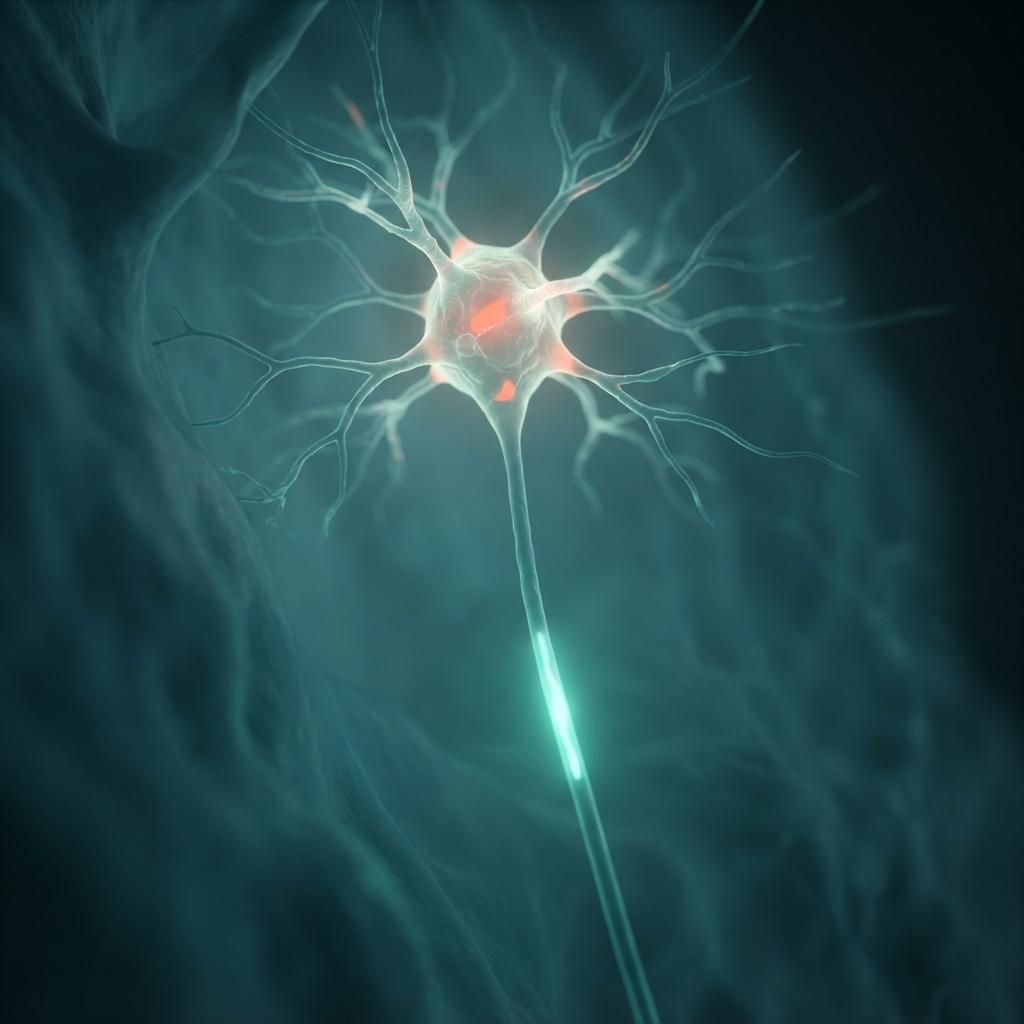
We can't see the signal itself. We can see what it does, in how a person walks, moves and keeps their balance. Neuromotion uses three small sensors to follow it.
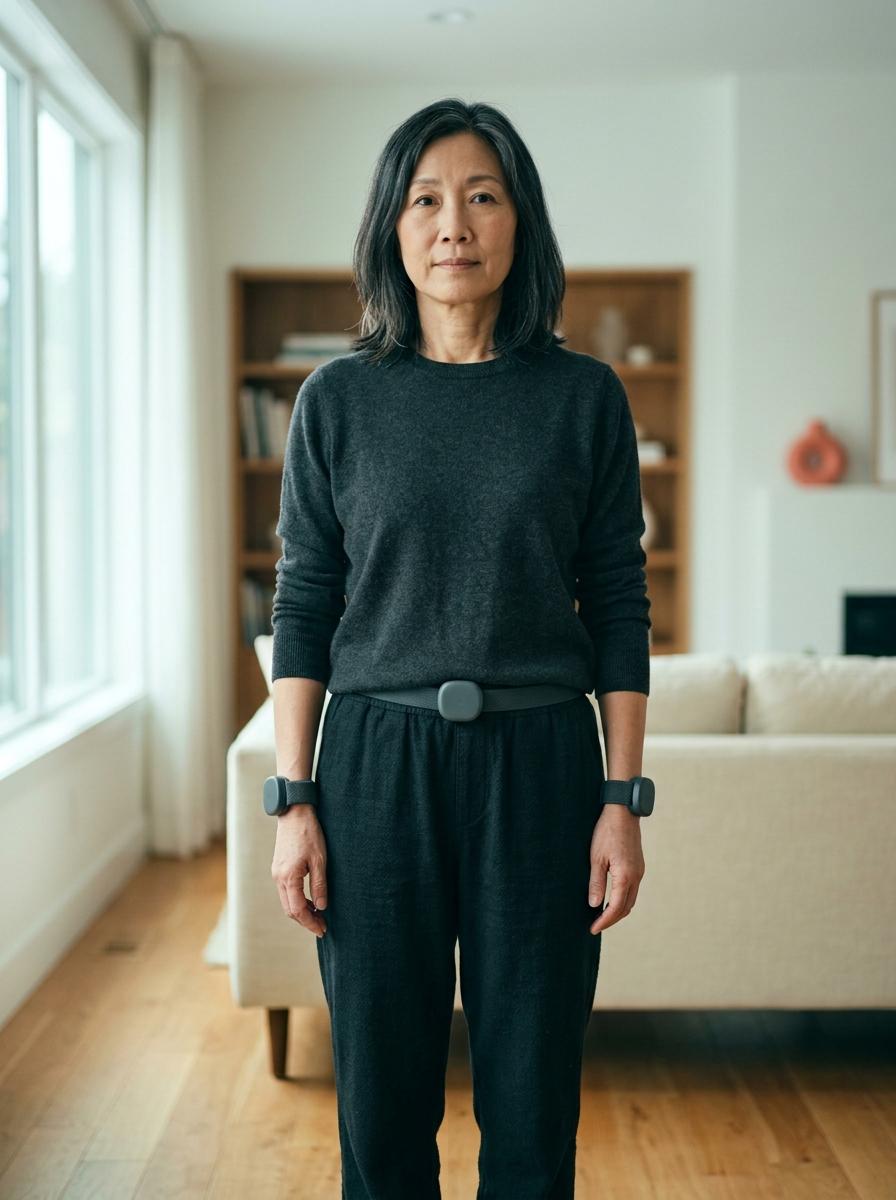
We measure movement. We don't measure the brain.
Good days, bad days and slow change all happen in the weeks between appointments. A single check in a clinic can miss most of them.
Illustration only, not patient data.
We start with walking and balance, and follow how they change for each person over time.
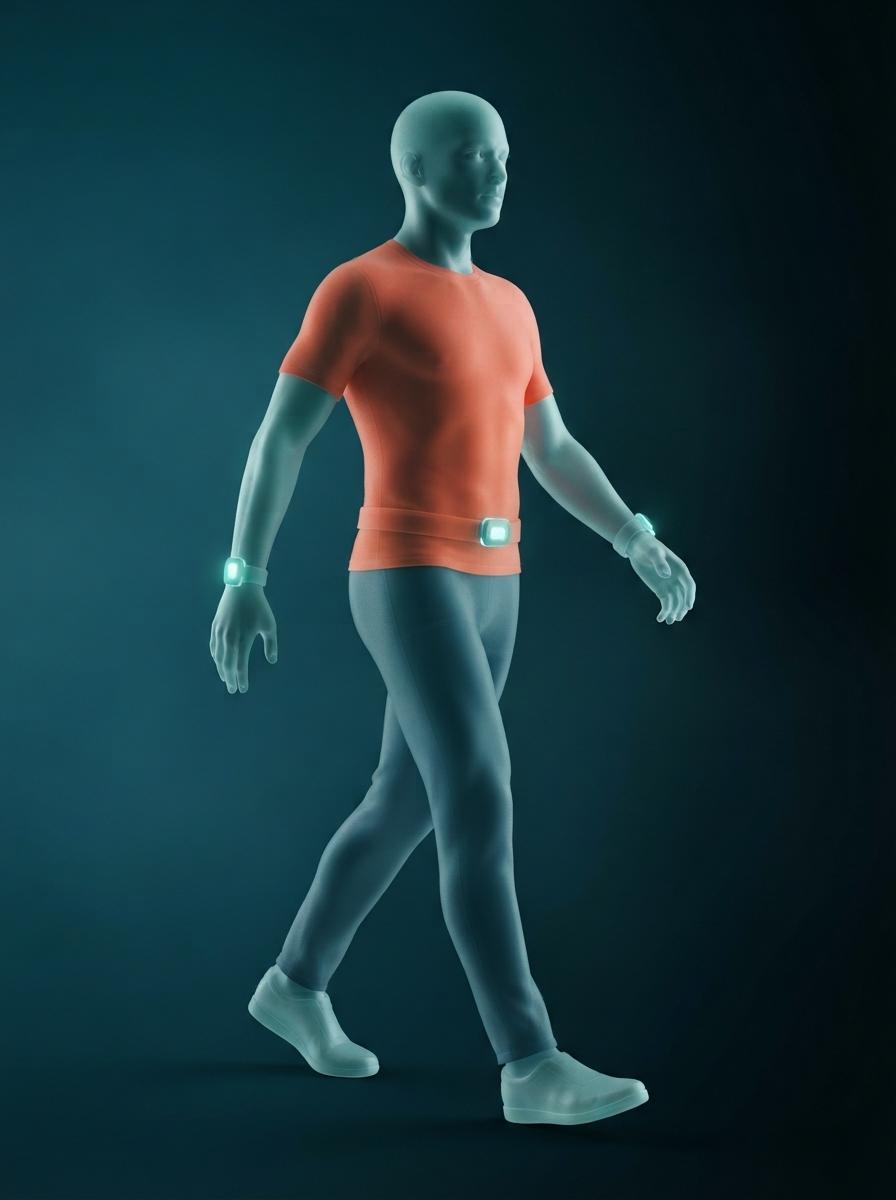
Short guided checks of walking and balance, with sensors on both wrists and the lower back.
Each result is compared with the person's own earlier results, not a generic average.
The pattern points to the next drill. The next check shows how the person responded.
We're studying whether everyday measures of gait and movement can follow recovery between standard care visits.
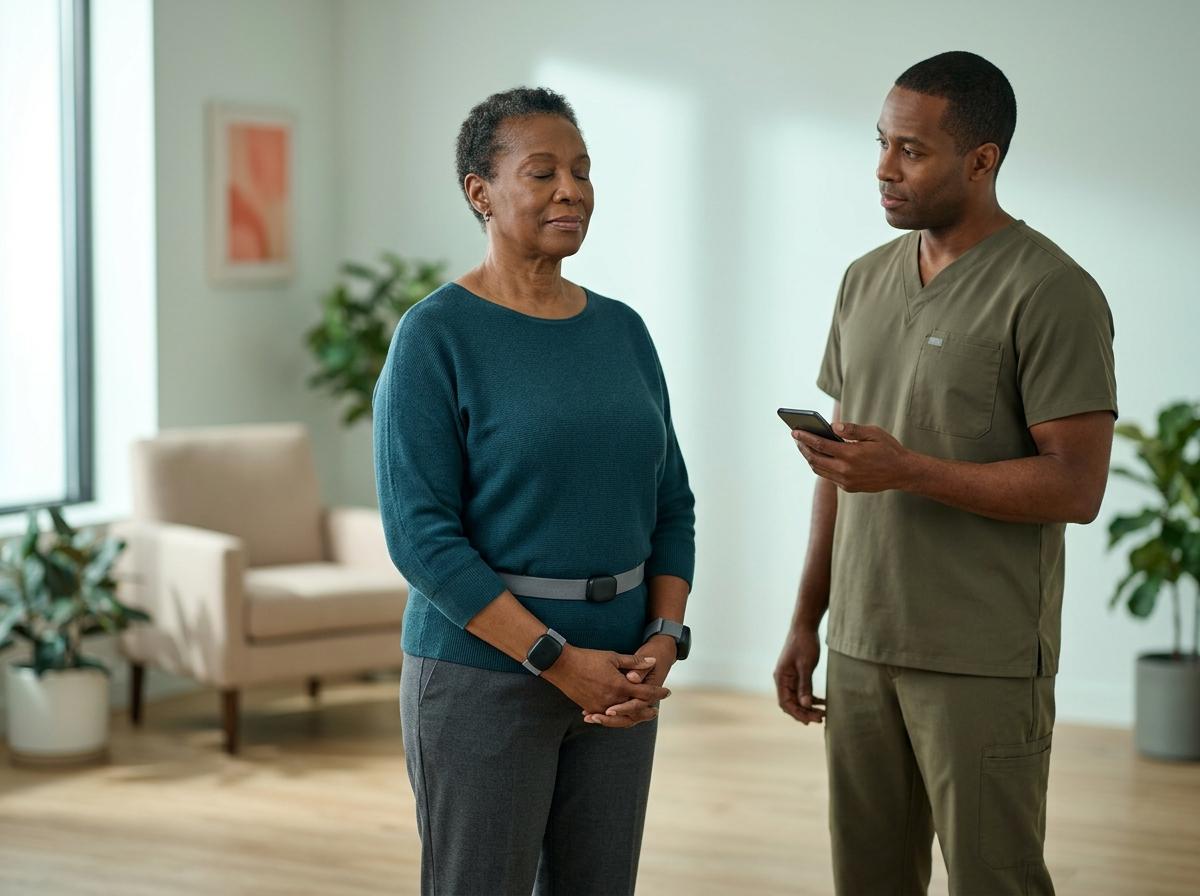
We're studying walking and balance over time, to support care that responds to each person rather than a fixed plan.
Neuromotion is at concept stage. If you're a clinician, researcher or partner and want to help shape it, we'd like to hear from you.
Email the team